
Food security in Cameroon is often discussed in terms of how much food the country produces, meanwhile, production is just part of the whole story. A farmer can for instance produce maize, tomatoes, beans or other crops but still barely able to feed his or her family. At the same time, consumers can face increasingly high food prices even when enough food is being regularly produced locally.
This raises an important question: Why is food becoming more expensive while many farmers remain poor?
The answer lies not only on the level of production, but across the entire food system.
A food system includes everyone and everything involved in getting food from the farm to the table, from farmers and input suppliers to traders, transporters, processors, wholesalers, retailers, markets, institutions and consumers [1].
That is from production, distribution, storage, processing right up to consumption. When one part of this system is weak, the consequences can be felt throughout the entire chain.For Cameroon, building food security therefore requires more than producing more food. It requires building a food system that allows farmers to earn decent incomes while ensuring that households can access sufficient, safe, nutritious and affordable food throughout the year.
When expensive food does not mean better incomes for farmers
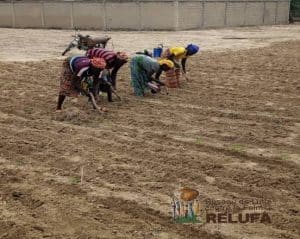 Across Cameroon, households are facing rising food prices. Staple foods such as rice, beans, tomatoes, onions and cooking oil can place significant pressure on household budgets.
For families with limited incomes, higher food prices can mean reducing meal sizes, replacing nutritious foods with cheaper alternatives or even skipping meals.
Yet many smallholder farmers the people at the foundation of domestic food production do not necessarily benefit from these higher consumer prices. The problem is that the price consumers pay at the market is not the same as the income received by farmers.
Between the farm and the consumer, food passes through intermediaries in several stages. Transport, fuel, labour, market fees, storage, packaging, processing, spoilage and other costs can all add to the final price.
Consider a plantain farmer located outside a major urban market like Yaounde. After harvesting, the farmer needs to get the plantains to consumers. But if there is no reliable farm-to-market road, reaching the market directly may be difficult or too expensive.
The farmer may therefore wait for a trader from town to come and buy the produce at the farm gate. The farmer may have little room to negotiate because plantains are perishable, and keeping them for too long creates the risk of losing the harvest altogether.
The farmer may have limited bargaining power and may feel pressured to accept the price offered. The buyer on the other hand must pay for transportation, fuel, labor and the risks involved in moving the produce to the market. These costs are then reflected in the price at which the buyer purchases the plantains because he does not want to be at the losing end.
Evidence from the Cameroon-Gabon trade corridor, for example, reveals that the producer’s margin represented only about 3 percent of the final consumer price for maize, while production costs and the producer’s margin for tomatoes accounted for about 20 percent of the final consumer price [2].
This means that a farmer can be at the very beginning of the food chain, carrying much of the production risk, while receiving only a small share of the value created along the chain.
The harvest is not the end of the farmer’s struggle
For many farmers, the challenge does not end when crops are harvested. In communities without adequate storage, there is a lot of spoilage most times and farmers can be forced to sell immediately after harvest at prices they didn’t intend to in most cases. So, when the supply is high, prices are often low. Waiting for better prices may not be an option because crops can spoil or be damaged by pests. This creates a difficult choice: sell cheaply or risk losing the harvest.
The consequences extend beyond farmers. When large quantities of food are lost after harvest, less food reaches markets which results to very high prices of produce in the market, making it difficult for many households to eat what they want thereby leading to a food insecure household.
For perishable products such as tomatoes, fruits and vegetables, poor storage and transportation can result in rapid deterioration. Farmers lose income. Traders lose part of their stock. Consumers face reduced availability and, potentially, higher prices.
FAO reported in March 2026 that losses can reach up to 40 percent for some crops in Cameroon, particularly fruits, vegetables and tubers, with losses occurring during handling, transportation, storage, conservation and marketing[3].This is why reducing post-harvest losses is not simply an agricultural issue. It is a food-security issue, a livelihood issue and a market issue.
If Cameroon can preserve more of the food farmers already produce, more food can reach consumers at affordable prices without necessarily requiring farmers to expand the amount of land they cultivate.
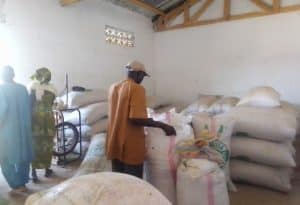
RELUFA’s experience with community grain banks.The Far North of Cameroon provides an important example of how communities can respond to seasonal food insecurity and storage challenges. In 2006, RELUFA began establishing community cereal banks in villages in the Diamaré and Mayo-Tsanaga divisions. The initiative was designed to respond to recurring food insecurity and seasonal shortages. [4]The model was simple but powerful.
Communities received an initial stock of cereals that could be made available to households during the lean season which is a season of adverse hunger. After the harvest, community members replenished the stocks. In this way, communities could maintain a local food reserve beyond the immediate harvest period.
The grain banks also helped address an important imbalance in agricultural markets. During harvest periods, farmers may be under pressure to sell because they lack storage facilities or need immediate cash. Later, when food becomes scarce, prices can rise significantly and that same produce they sold is resold to them at much more higher prices, which most community members are unable to purchase. Community grain banks offered an alternative: store food when it is available and make it accessible when households need it most. That is during the lean periods.
RELUFA’s experience shows that community-managed storage can contribute not only to food availability but also to household resilience, better management of agricultural stocks and reduced exposure to seasonal price fluctuations.
The program reached communities across the Far North, with approximately 25,000 people benefiting directly or indirectly according to the evidence presented in the study. This experience remains relevant today.
Food systems are also about roads, markets and finance
A farmer cannot benefit fully from increased production if they cannot get their products to market. Poor rural roads can make transportation slow and expensive. Farmers in remote communities may therefore depend on buyers who come directly to their villages. With few alternatives, they may have limited bargaining power and may have to accept the price offered.
Storage problems make this even worse. A farmer who cannot safely store maize, tomatoes or other produce cannot easily wait for a better market price. The need to avoid spoilage can force them to sell quickly even when prices are low. At the same time, traders also face high transportation costs, particularly where roads are in poor condition. These costs can influence the prices they are willing to offer farmers. Improving food security therefore requires investment beyond the farm.
Farmers need:
- reliable farm-to-market roads
- affordable and quality agricultural inputs
- access to finance and agricultural services
- adequate storage and processing facilities
- stronger links to markets
- better bargaining power and
- access to information and appropriate technologies.
These investments can help farmers bargaining power and help them earn better returns while also reducing unnecessary costs and losses throughout the food chain.
Conflict and climate change are making food systems more fragile
Cameroon’s food system is also being tested by shocks that farmers and households cannot control. Conflict, displacement, floods, droughts, irregular rainfall, pests, rising input prices and food-price volatility can disrupt food production and markets. [5]
In conflict-affected areas, farmers may lose access to their farmland or be forced to abandon their fields. Traders may be unable to move safely between communities. Displaced households may lose productive assets and sources of income. Just like in the case of the far north region of a Cameroon battling Boko-Haram and the north west and south west regions of Cameroon plagued with the anglophone crisis.
Climate-related shocks can create similar problems. Flooding can damage crops while simultaneously disrupting roads, markets and other infrastructure.
These shocks can reinforce one another: Shock → loss of production or income → reduced food access → negative coping strategies → weakened livelihoods → greater vulnerability to the next shock.
Breaking this cycle requires more than emergency assistance. Communities need systems that allow them to prepare for shocks, absorb their impacts, recover and continue producing and accessing food. That is what resilience should mean in practice.
How do we make the food system work?
Cameroon certainly needs productive and sustainable agriculture. But increasing production alone cannot guarantee food security.
Food must also be:
Stored
Transported
Processed
Marketed
Distributed
And Made Affordable
This broader understanding is increasingly reflected in Cameroon’s food-system agenda. In March 2026, the Government of Cameroon and UN partners launched the CONVERGEFOOD Joint Program, which focuses on transforming food systems, strengthening agricultural value chains, improving access to finance and connecting smallholder farmers and agribusinesses to more inclusive markets.[6] This shift is important.
The question should no longer be only: How can Cameroon produce more food?
We must also ask: How can we ensure that food produced by farmers reaches consumers efficiently, remains affordable, provides decent returns to producers and remains available despite economic, climate and conflict-related shocks?
What needs to change?
Building a resilient food system requires action from many actors.
Government and local authorities need to invest in rural roads, storage facilities, markets and agricultural services while developing policies that support farmers and protect vulnerable households.
Producer organizations can strengthen farmers’ bargaining power and help them access better markets.
Financial institutions and private businesses can make finance, services and markets more accessible to smallholder farmers.
Technical and financial partners can support long-term investments that help communities prepare for and recover from shocks.
Civil society organizations have an important role in amplifying the voices of farmers and vulnerable households, monitoring policies and public investments, and promoting accountability.
And communities themselves must remain at the center of solutions that affect their food systems. Solutions should be designed with communities, not simply for communities. That is, The Communities themselves must also have a voice in shaping the solutions that affect their food systems. Their knowledge, priorities and experiences should guide decisions about what works best for them.
In all, Cameroon does not simply face a food production challenge but it faces a food-system challenge. Food security cannot be achieved simply by producing more food. It is achieved when farmers can produce without being trapped by high input costs, weak markets, post-harvest losses and inadequate infrastructure and when consumers can access sufficient, safe, nutritious and affordable food.
A resilient food system is not one that never experiences disruption. It is one with enough capacity to withstand shocks without allowing temporary disruptions to become prolonged.
RELUFA’s experience with community grain banks demonstrates that locally driven solutions can make an important contribution to this resilience. But community initiatives must be supported by wider investments in infrastructure, markets, finance, agricultural services and accountable public policies.
The pathway to household food security therefore begins with a simple but powerful principle:
Food security is not achieved simply when food is produced; it is achieved when the food system works for both producers and consumers.
The time for action is now and building a resilient food system means ensuring that farmers have a fair opportunity to earn a living, communities have the capacity to withstand shocks, food losses are reduced, and every household can access adequate and nutritious food throughout the year.
By Prudencia Ayamba
References
Food and Agriculture Organization (FAO). (n.d.). Evaluating agri-food systems. https://www.fao.org/evaluation/highlights/agri-food-systems/
World Bank. (2018). Breaking Down the Barriers to Regional Agricultural Trade in Central Africa. https://documents1.worldbank.org/curated/en/233071535650013216/pdf/127883-REPORT-CEMAC-Agriculture.pdf
Food and Agriculture Organization (FAO). (2026, March 16). Reducing Post-Harvest Losses in Cameroon: A Priority for FAO to Strengthen Food Security. https://www.fao.org/cameroun/news/detail/reducing-post-harvest-losses-in-cameroon–a-priority-for-fao-to-strengthen-food-security/en
RELUFA. (2024, July 7). Grain Bank: Description of the Cereal Bank Project in the Far North of Cameroon. https://www.relufa.org/publications-en/grain-bank/
FEWS NET. (2026, October). Conflict Compounded by Rainfall Deficits to Sustain Elevated Assistance Needs Through May. https://fews.net/west-africa/cameroon/food-security-outlook/october-2026


Well done, Prudencia! Powerful insights on why resilient food systems matter for farmers, for us and our families.
Excellent read, Prudencia. I really appreciated your breakdown of the supply chain, especially the systemic aspects that financial markets or government policies can improve.